
The stupidity of people comes from having an answer to everything. The wisdom of the novel comes from having a question for everything.
~Czech Novelist Milan Kundera
It appears every Democrat, Republican, journalist and pundit is channeling the protagonist in Michael Ritchie 1972 classic movie “The Candidate.” Following his long-shot victory to become the next Senator from California, Bill McKay (Robert Redford) escapes the celebration for the solitude of his hotel room. His campaign manager Marvin Lucas (Peter Boyle) tracks him down.
LUCAS: We’ve got 60 seconds before they find out we’re here…so, what’s on your mind, Senator?
MCKAY: What do we do now?
LUCAS: Wait. What?
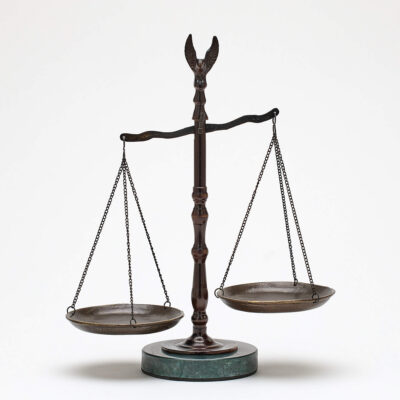
In the seven days since the “Blue-nami” changed the American political landscape we may not have all the answers but we have a pretty good clue about the questions. There appears to be one common denominator. After a decade of chaos, how do we re-establish equilibrium? To make my point, I will share four questions that immediately came to mind over the past week.
Question #1: What is the point of equilibrium between having too much money to spend during a political campaign and not having enough?
If you live in the Jacksonville, Florida television market during an election cycle, you are “blessed” with campaign commercials promoting candidates in both the Sunshine State and Georgia. In the 2026 midterms, it did provide a unique perspective on the role of money in political campaigns. North of the border, Georgia businessman Rick Jackson reportedly spent $110 million of his own money to run for governor. Of that amount, most was spent on ad placements, unfortunately, on the one thing I still watch on broadcast television, sporting events. And being fall, those events included NFL and college football plus the major league baseball playoffs and World Series. What you could not miss was the fact that the same two ads were shown over and over, ad infinitum. One featured current governor Brian Kemp endorsing his heir apparent. The other suggested governor-elect Keisha Lance Bottoms had done more damage as mayor of Atlanta than William Tecumseh Sherman. By election day, I wondered if some Georgians voted for Lance Bottoms out of pure irritation.
Georgia was not alone. In Texas and Ohio, Democratic messaging focused on turning Republican opponents’ financial advantage into a liability, telling voters that they should not allow mega-donors like Elon Musk to buy the election. At every campaign stop in the Lone Star State, both governor-elect Gina Hinojosa and senator-elect James Talarico played on the motto for the state anti-littering campaign, “Don’t Mess with Texas.”
On our side of the state line, the airwaves were saturated with ads from the two Republicans at the top of the ticket: governor-elect Byron Donalds and incumbent senator Ashley Moody. Their Democratic opponents lacked the resources to counter the often false claims made against them, leaving Florida out of the blue tsunami euphoria on election night. The unanimous opinion of Wednesday morning political quarterbacks centered on a belief by the Democratic National Committee, Democratic Senate Campaign Committee, and the Democratic Governors Association that throwing money into Florida was a fool’s errand. Unfortunately, it is impossible to know for sure.
However, 2026 is simply a snapshot in time. While the midterm results may seem like a rebuke of big money, it is too early to tell if it is an anomaly or a trend. In 1996 Texas senator Phil Gramm was considered the prohibitive favorite to be the Republican nominee for president based on the campaign war chest he accrued at the beginning of that election cycle. When Gramm shuttered his campaign BEFORE the New Hampshire primary, we heard the same death knell about the importance of money in politics.
Question #2: What is the point of equilibrium between legitimate congressional oversight and weaponization of federal institutions to exact revenge on an opponent?
Weaponization of the federal government, like art, is in the eye of the beholder. We are now exiting on the back end of a fourth election cycle in which the minority (i.e. losers) will accuse the majority (i.e. winners) of using their newly acquired power to seek retribution against their political enemies. After the 2016 election, it was Trump, even though he won the electoral vote, attacking the Obama Department of Justice’s obsession with the “Russian hoax.” After 2020, Trump claimed the mantle of martyrdom when facing a plethora of federal and state charges involving the January 6, 2021 insurrection, classified documents, sexual misconduct and financial fraud he viewed as retribution by the Biden White House and Justice Department. Four years later, Trump made no secret of his intent for payback. He told rally audiences, “When they come after me, they are coming after you. I am your retribution.”
Faced with sizable majorities in the House and Senate, how can Democrats address Trump 2.0 corruption which polls show was a major factor in this blue wave election? [In the AP News poll of 2026 voters, 90 percent said corruption was critical to their voting decision.] Let me suggest that equilibrium may lie in balancing punishment with accountability and resolution. Let’s take the very recent example of an attempt to impeach Secretary of Defense Pete Hegseth.
At the outset, I want to stipulate that impeachment and conviction of high crimes and misdemeanors are the limpest instruments in the Article I toolkit. More importantly, it does nothing to resolve the factors that contributed to Hegseth’s misconduct and incompetence or prevent a similar situation in the future. The target of congressional investigations should not be impeachment. Instead, the goal should be exposure of violations of the law or military code of conduct, identification of the root causes of those violations, and legislation to address the root causes. Two examples. First, the inspector general of the Department of Defense must be confirmed by the Senate and cannot be removed from that position without approval of the Senate. The rationale for this change is that the supposed DOD “watchdog” cannot do his/her job when that official serves at the pleasure of the head of the department. Second, the 60-day grace period under the 1973 War Powers Act should apply ONLY if the homeland or a U.S. asset abroad is physically attacked. Otherwise, the president must seek congressional approval prior to initiating a war of choice as was the case with Iran.
Question #3: What is the point of equilibrium required to hold on to one’s base voters and distancing oneself from an unpopular leader and his/her agenda?
Maybe you are asking, why would any Republican fear breaking ranks with Trump or his agenda more than they fear the overwhelming majority of voters who delivered a resounding verdict about their performance over the past two years? That question surfaced immediately during Wednesday’s vote to proceed with Hegseth’s impeachment. I believe the answer lies in the increasingly monolithic makeup to the MAGA Republican party. According to the latest available data, the aggregate vote for all House candidates was 56.55 precent for Democrats and 43.45 for Republicans. Of the GOP total, 59 percent identified as MAGA Republicans according to ABC News exit polling.
Of course, future GOP candidates need more than 43.45 percent of the vote in a general election. However, even if Trump is not a player two years out, under the current makeup of voters who identify as Republican, those candidates need that MAGA 59 percent of their party’s faithful just to be on the general election ballot. This is especially true in states with closed primaries. For most MAGA voters, Hegseth “is our guy.” So while some 2028 Democratic challengers are likely producing campaign ads with their GOP opponent blocking Hegseth’s impeachment, those House members in red districts who survived the blue wave do not want to be the next Tom Massie (R-KY) who introduced the articles of impeachment. He became a victim of GOP monolith months before the blue wave began forming off-shore.
Democratic members of Congress face the same challenge, not from homogeneity but as a by-product of the breadth of their coalition. Every vote they take will alienate some faction under their big tent. Compromise would seem to be the preferred course of action. However, trying to please everyone often backfires. Though given a choice between the challenges facing each part, when the 120th Congress is sworn in on January 3rd, I would rather be sitting in the blue seats.
Questions #4: What is the point of equilibrium between addressing issues that voters said were critical to their choice of candidate and the ability to cover the cost of resolving them?
On November 3rd, voters demonstrated their ability to connect the dots. This was most evident in the correlation between the importance of both the economy and corruption when casting a ballot. As mentioned above, 90 percent of voters told AP News that corruption was a critical factor in their decision. When it came to the economy, that factor was viewed as critical by 89 percent of the same respondents. But will they make a similar finding when it comes to the intersection of deficit spending and the cost housing, transportation, etc. Repealing sections of the One Big Beautiful Bill (OBBB) to restore ACA subsidies and child nutrition programs seems high on the list of early wins for the new Congress. But at what cost? Each will add billions to the FY2027 deficit and the national debt. Congress always has two choices. They can reallocate the existing budget, shifting dollars from unpopular programs such as ICE to health care and nutrition. Or they can amend the tax rates under the OBBB to cover additional expenditures.
There seems to be an appetite among voters to increase taxes on the uber-rich. However, a proposition in California that would have imposed a one-time, five percent tax on wealth failed to do just that, Exit polls suggest Californians felt the measure went too far. Redistribution of the tax burden that threatens economic growth and job creation tempers one’s taste buds. The Clinton/Dole “grand bargain” in 1996, which raised tax rates and cut discretionary spending, stands as a model for re-consideration under the current circumstances.
One question we need not ask is, “Will the Republican National Committee and its affiliate organizations conduct an autopsy of their 2026 midterm massacre?” You can bet the farm they will. The losing party always does. Which brings me to my last question, “Will Democratic organizations do the same?” Why? To avoid a similar debacle in two years. After the 2024, Donald Trump and the RNC thought they owned the Hispanic and young male vote. Obviously, no one reminded them you never OWN voters. You RENT them. And when the time comes to renew the lease, if the landlords fail to meet their obligations, those tenants who made the blue tsunami possible will look for a new place to hang. Which is why the Democrats need to do their own autopsy even if they believe they did everything right, you know, just like Donald J. Trump in 2024. Thank you for your attention to this message.
For what it’s worth.
Dr. ESP
What is the point of equilibrium when eleven Democrats failed to vote on the Hegseth impeachment because they were stuck in traffic?
Czech, please!